For my final project in Circuit Design and Prototyping, I plan to make a customized muscle sensor (EMG) for my thesis MASK, and the idea is to use the data as a measurement of mask wearer’s nervousness, and try to cope with it with MASK (virtually and hopefully also physically).
Research
- Tutorials: DIY EEG Circuit, DIY EMG Circuit
- Documents: 1(general introduction ppt), 2(detailed paper), 3(a chapter of a book)
- Products: Sparkfun, Backyard Brains(1, 2, 3[2 channels!])
Breadboarding
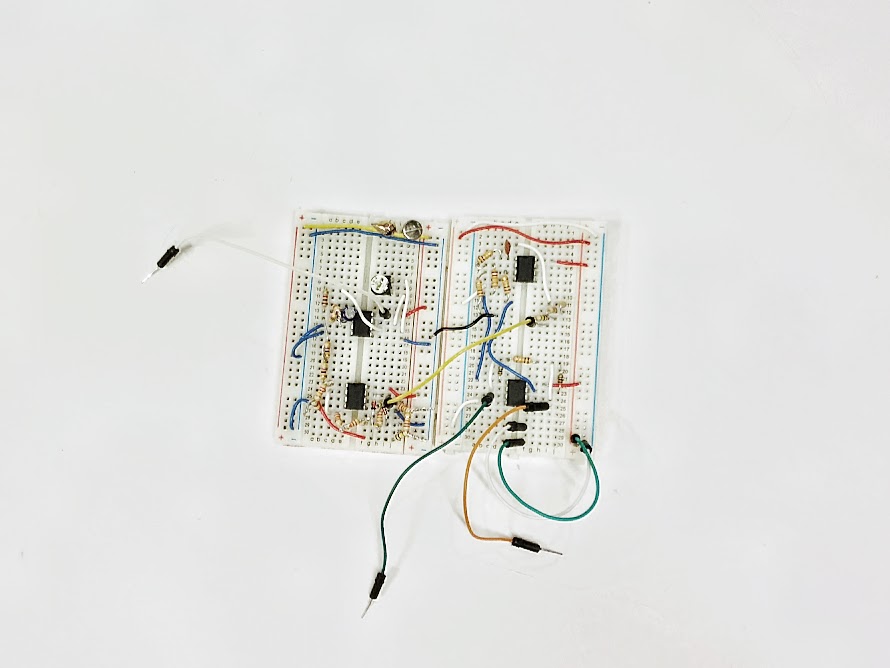
This is the first attempt to breadboard the muscle sensor, based on the design of the one on Sparkfun and also the tutorials on instructables. Because I don’t have the component, e.g. instrumentation amp, specific resistors, there are a lot of hacky moves, and I need sticker patch electrodes, 9v batteries*2, and components to know if it’s working or not :/

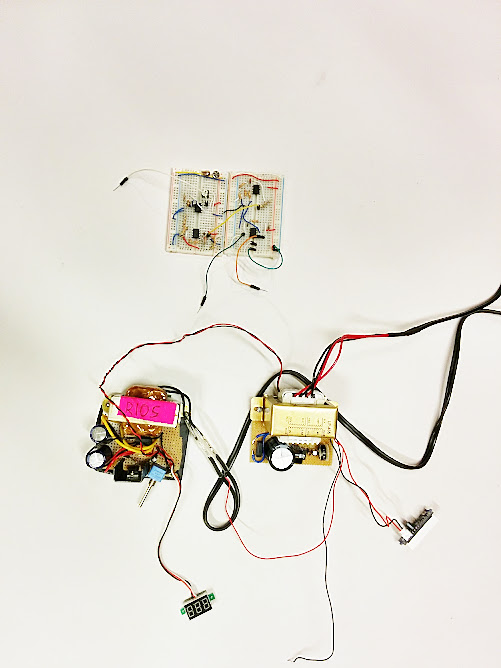 <– originally thinking to hook up two power supplies, but because it requires one’s positive connecting to another’s negative, I think I should ask Eric first to see if it’s safe to do that instead of using two batteries
Next steps
- Order components (Should I order both surface mount(for final) and through hole(for testing)?)
- Combine and adjust SpikeShield 2-Channel SpikerBox’ schematics, so having two inputs for microcontroller (using ATTINY)
- Design the shape and arrangement of the circuit to fit on the mask
- Qs to answer
- What’s the power supply strategy to integrate microcontroller on the same board, with 9V for sensors and 3~5V for microcontroller?
- …
Getting excited :DDD Lots of work and to be continued!